Friday, September 7, 2012

Photos of the Chocolate Festival 2012


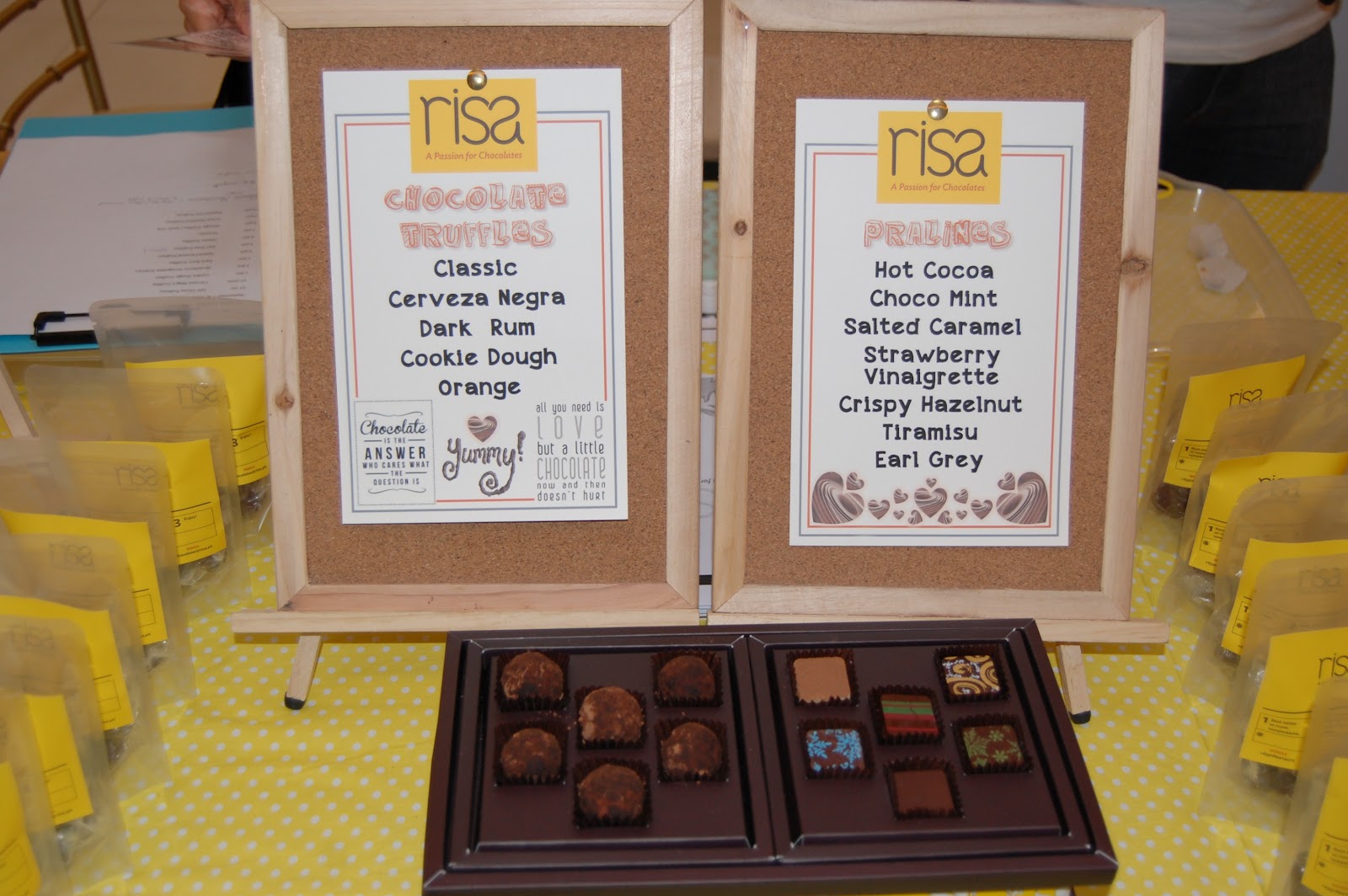
Thanks to my chocolate sponsor for the opportunity to splurge and shop at the Chocolate Festival 2012. I purchased a box of Risa Chocolates truffles (that got melted  when I arrived home) and pralines, and another box of truffles and pralines of Chef Laudico of Patisserie Filipino, dark chocolate bars from Marks and Spencers (Peruvian, Madagascar and Equador), slices of tablea cake by ChocoATBP ( also, I was able to taste different flavors of their tablea drink - chili and cream), cupcakes by Baked by Anita and got a cute chocolate plastic pencil case. I am planning to go back on Sunday for the chocolate buffet and chocolate making demo.

Finally, I got to meet the folks of Risa Chocolates. I created a pinterest board here - http://pinterest.com/rahonpete/risa-chocolates/ now I have more of their chocolates to add to the board. They got the most prominent space occupying the entrance of the chocolate festival.

However, instead of expecting chocolate bars, I came across several pastry and bakeshops producing chocolate cakes including truffles and pralines.


 One of the most interesting personalities that I came across was Mr. Zoilo Andin, Jr. who owns the Filcomfort Foods, Inc., and ChocoATBP. I had a nice chat with re cacao growing in the country and the Department of Agricultures plan. I will be learning more about from him re cacao farming here in the country. I got to try his tablea hot choco with cream and with chili both are good drinks.


Risa Chocolates


Patisserie Filipino by Chef Jacqueline Laudico


Baked by Anita   
I tried several of their pastries

  Ultimate Chocolate Cupcake 
made of Valrhona: stuffed with dark chocolate truffle 
crowned with choc mousse and drizzle of choc sauce


Chocolate Ice Cream Stand
(Forgot the Italian brand/name and I was not able to taste this)

 Cinq
(A bit pricey pastries)


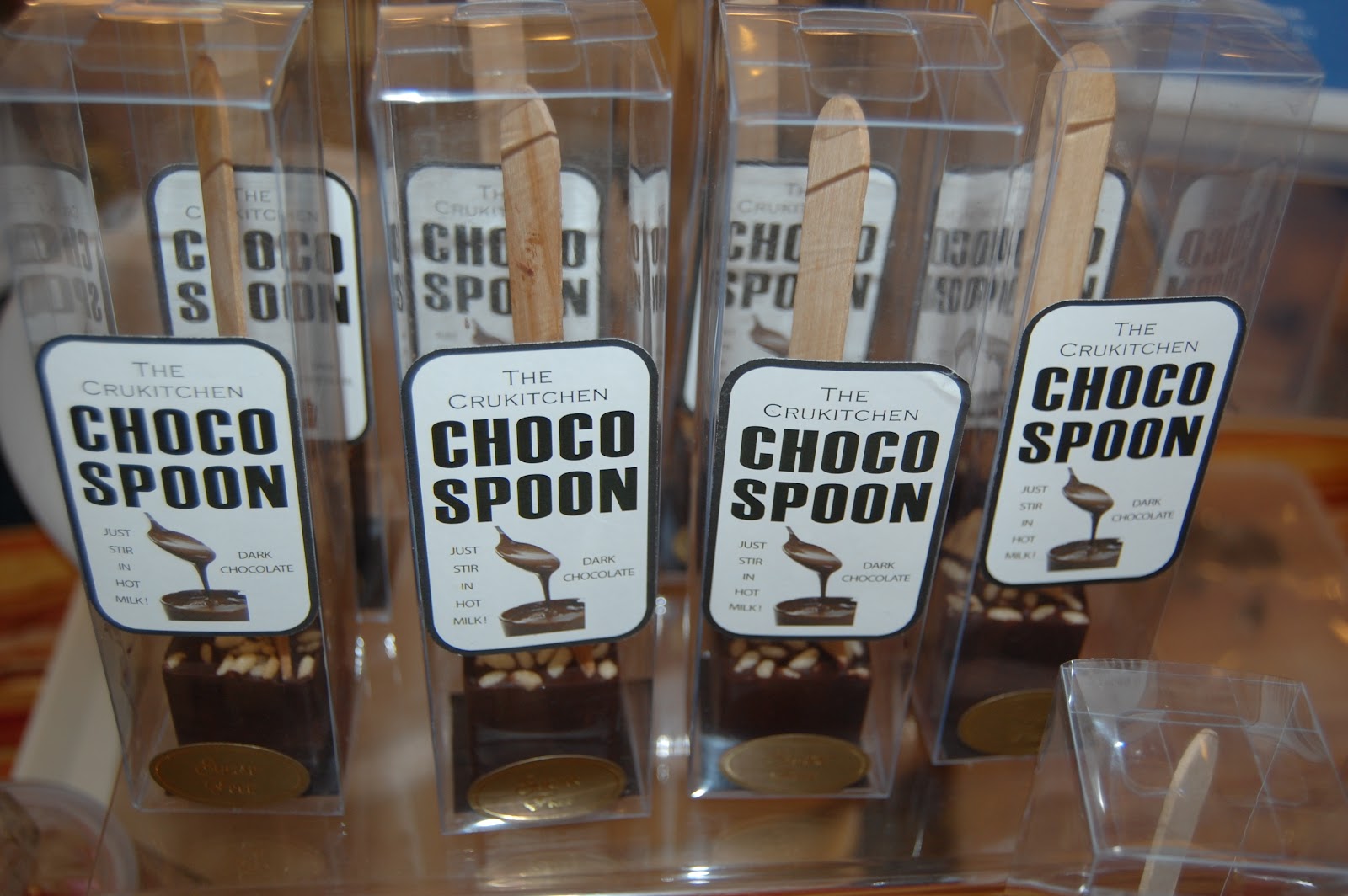
The Crukitchen


(I was not able to try this choco spoon, look interesting)


Russian Cookie House

A centerpiece display close by the stage made by  
Sugar Paste Sweets and Pastries.


It was my first time to encounter Marks and Spencer lines of chocolates.  
I got several of the dark chocolates which I will review and blog next time.


Anything-Chocolate-Brown Knick-knacks


 I got one of those dark colored pencil cases.


Thursday, September 6, 2012

Chocolate Suppliers at the Food and Drinks Asia 2012


After office, I visited the Food and Drinks Asia 2012 Event at the World Trade Center. My particular aim was to find anything chocolate related in the exhibition/event. It was a 3-in-one event that also include Food Franchising and Grocery Asia. Lot's of food tasting and cooking demonstrations. So the entrance fee is worth it, sulit! These kind of exhibitions or events are not only good for investors or entrepreneurs but as a blogger and consumer it is also an opportunity for me to be more informed about products that I consume. And I hope that it will make me an informed and enlightened consumer, that of chocolate in particular. But also, I gained insights from other non-chocolate products as well.

I learned from my conversations with different local chocolate suppliers/companies that it is an industry practice not to  divulge information about the sources or suppliers of their international importations of chocolate couvertures and supplies in the name of market competition. It is the same with some bakers and pattiseries strategy of protecting their secret ingredients of their products. But some are not too guarded to reveal where they source their importations or for
bakers to inform chocolate ingredients that others also use for their cakes and pastries.

It was my first time to come across names the like of Dutche and Puratos (Carat, Belcolade etc). So it seems the chocolate business in the country is still dominated by big European suppliers particularly those country origin of Belgian and Swiss couvertures. One baker informed that the other chocolate premium brands are too expensive for them to use and would jack-up prices of their cakes and chocolate. But those expensive brands on rare ocassions are used per customers request.

I had the impression also that bakers and pastry chefs tend to stick to a particular brand since customers  get used to a particular taste and would complain if they find a different taste in their second purchase of the same product. Consistency is an attribute for some bakers.  Customer would patronize bakers and pastry chefs for distinct and particular taste or flavor of cakes/pastries that they get accustomed to. So consistency for quality is a way for bakers to keep their loyal
customers coming back to them.

But for me with an evolving taste for chocolates, I am also particular as to the kind of chocolate I am eating (as to its single or country origin), where and how it was sourced (free trade and eco-friendly). I had an interesting exchange with one of the suppliers who seems not convinced that Philippines will be able to produce and compete with the European manufactureres given their long tradition and the kind of climate the country have.I told the exhibitor that I am also concerned about the issue of fair trade and child labor in Africa since it was mentioned that their European supplier source cacao from that continent. Being told they are into wholesale and supply most businesses  that uses chocolate  I am now more conscious with products that has chocolate in it like donuts, cakes, truffles, chocolate drinks and other choco products.

I pointed out that Cacao Coops in Davao are now into producing good quality couvertures and it is even used by Askinosie.

And there's an effort to revive the cacao industry. I was reminded of cacao disease and infestation that happened in Quezon that I admitted I have no knowledge about and for that I need to do some research to be more informed. As a blogger who at first intended to just blog about reviews of chocolate bars, I am now more keen on the need also to blog about the cacao industry and help promote it so that the chocolate that I like and love will not have to be sourced out or imported from other countries but can be locally produced and manufactured. So cacao growers or farmers will have more income and more beautiful cacao trees will be planted to add up to greenery and beautify the Philippine landscape.

But definitely I would still want to continue to taste and review cacao or chocolate bars from other countries.

Below are some chocolate suppliers/companies that are mostly based in Paranaque. I have not tasted most of their products but still I listed them here for reference that might be helpful to others. Also it is chocolated related. So it is a free marketing for them (I was not paid to have them listed here). So, it is to readers discretion whether to buy or not from them. I can't assure and guarantee readers as to the quality of their products.


Contact Information of some Booth Exhibitors 

Sweet Mary Ann's Patisserie
0917-8576-6744 / meraypilapil@gmail.com
I had a chance to talk to them and learned that they source their cacao from Albay in Bicol Region. Although they are not familiar of the variety of cacao since it was gathered from neighbors. Most households in Bicol I came to know grow in their backyard cacao. She  produces tableas and truffles aside from other patisseries.


Dolce Bianquita 
Bianca Pensotes
dolcebianquita.multiply.com / dolcebianquita@yahoo.com
I had a nice conversation with her and learned a lot of those chocolate couvertures she uses for her cakes/pastries and chocolate truffles. Also she guards her secret ingredients to some of her products.


Miguelitos Int'l Corp.
www.miguelitoscorp.com
They got a big booth and several staff but very secretive as to the source of their cocoa supply which they said European.


Delicatesse Food Corporation
info@delicatessefoods.com / www.delicatessefoods.com
A wholesaler of chocolate supply.


Coco Natura
Patrick Lee and Art Roy
patrick@coconaturasugar.com / www.coconaturasugar.com
I thought coco sugar could be an alternative to cane sugar. But, I wonder how it would mix with chocolate. I am not sure yet of pastry Chef using this kind of sugar. But the exhibitors mentioned that it is good alternative sugar for diabetic.


Achievers Food and Bakery Ingredients Corp
achievers.ph@gmail.com / www.achievers.com.ph
Got several of their brochures since the staff could not answer my queries and their main person was moving around when I went to their booth.


Bencrest 
Bon Chan(b.chan@bencrest.com.ph) /929-0712
Their booth sells Soyfresh (soya drinks) and other imported Malaysian chocolates and chocolate coated biscuits and wafers.


Saturday, September 1, 2012

Chocolate Blogging More Fun in the Philippines!

(Hot choco drink, tablea and cacao seeds)


Below were questions asked to me by Zy of The Filipino Lifestyle,  I like to share my answers here. Hobbyist in Focus: Pete Rahon was the title of the article. Excerpts were culled from my answers below.

1.    How did you get into blogging about chocolate?

I discovered pinterest.com and from there it reawakened my fond memory of eating my first chocolate cake that my aunt baked for me. I started  f repining all those beautiful photos of chocoIate cakes. Then I thought of blogging about chocolate. I thought of  pinoychocophile (Filipino lover of chocolate) for a name. I found out that unlike in other countries  that blog solely about chocolate, here in the country I believe I am the first blogger to blog only about chocolate. Some food bloggers do blog about chocolate but not their primary blogging niche.


2.     Did you plan to be a chocolate blogger from the start or was it just coincidence?

So it was not planned at all since I have several blogs already from personal to social issues. So this chocolate blog was a product of my interest of chocolate cakes. I am still in the process of developing it since even for  chocolate as a topic you can go as varied with your subtopics. For now I like to do reviews or tasting of those chocolates made by Filipino artisan chocolatiers ( like Theo and Philo and  Machiavelli among others) and also those other foreign commercial brandsbut  mostly dark chocolates (more than 60% cacao content) . But I would also like to write about the history and tradition of chocolate in the country like doing a review of the best  Tablea that are used to make hot chocolate drink. Since we have good producers from Batangas, Cebu and Davao. In line with that, I would like to visit cacao plantations and write about how they are grown and produced.  Also, There are also several restaurants that serves mostly chocolate in their menu like Heavenly Chocolate in Roces Avenue in Quezon City. So I would like to review also the chocolate food and drinks served in those restos.


3. Aside from chocolates, do you have interest in other types of sweets? (hard candy, jellies, etc.)

I got a sweet tooth but for now anything chocolate coated sweets like pralines, bonbons and truffles will definitely part of my chocolate blog. Aside from that I do not blog other type of sweets.


(Theo and Philo - 7 Kinds of Dark Chocolate)


4.       What kind of chocolate do you prefer? (White, dark, etc.)

It seems preference for chocolate comes with age. When I was younger I really like white and sweet chocolates. I still like them though. But for the health benefits of dark and bitter chocolate or those with higher cocoa content (70-80%), I have developed my liking for them. Reviewing  fine dark chocolates is akin to wine tasting. So in reviewing chocolate you consider aspects like its cacao content, its origin (terroir/place, flavor and notes) and the process it was produced.

5.       Do you have a preference when it comes to the origin of the chocolate? (Foreign or locally made)

The Philippines artisan chocolate industry is relatively young  but very vibrant. So for now we have limited producers. Although we have our own commercial and locally produced chocolates that contain other ingredients (not necessary butter oil  of cacao and a good cocoa content), I do eat them once in awhile to remind myself of the good old days. But definitely we are so much exposed of brands like Candbury,  Hershey’s, Swiss and Belgian chocolates that abound in duty free shops I do like them but now I am beginning to appreciate other kind of chocolates,  which is  artisan chocolates.

6.       What misconception about chocolate would you want to be corrected? (if there is)

Not all chocolates are created equal.  Artisan chocolates maybe a bit more expensive but these chocolates are made by craftsmen with devotion, passion and creativity put in each chocolate bar they pack in some fancy wraps.

We should not to be deceived that only American or  European chocolates are the best there is. In the Philippines, since we can grow cacao we need to patronize our cacao growers and artisan chocolate makers and prove to the world that we can also produce the best chocolates.

(Royce Chocolate - Criollo)


7.       Where do you get the chocolates that you review?

For chocolates that I review some are balik-bayan pasalubong (coming home gift) of friends. Others I discover from chocolate shops or boutiques, restaurants and groceries.

8.       Are the recipes in your blog your own? (If yes, do you personally cook them?)

I found online and from you tube a chocolate recipe that I tried doing once but it was a dish-saster. I was so close at discovering how to make toorsie roll and on another attempt I thought I just discovered making chocolate tiramisu. I hope to try again and this time I plan to make use of our own tablea instead of cocoa. And should I be successful the next try I will definitely blog about it  and perhaps  have it patented!

9.       What are your tips to aspiring special niche bloggers?

Passion,  commitment and creativity. It is hardwork to do research and readings aside from the numerous other things you are already doing.  You need to spend time to make your blogging more relevant and interesting to readers and yourself. And when you get bogged down have fun with your blogging be more creative and personal, after all it is your blog, your voice. Go out explore and discover, join events or create one. Connect  and link up with people of your same  interests and be ready to exchange and learn from them.

10.   Do you plan to change the niche of your blog in the future?

Well it is good to write about many topics. It is perhaps writing about  other good and relevant topics there is to blog about. I am very much open to exploring other possibilities of writing or blogging.

11.   What message can you leave our readers regarding your hobby?

Chocolate blogging. More fun in the Philippines!


(Machiavelli Chocolate - Batangas Star) 

Wednesday, August 29, 2012

Eastwood Mall Chocolate Festival

Finally an event that I look forward attending! I do not have yet information and details of the events and will be posting here as soon as I get new updates. An advance announcement for Pinoychocophiles to mark your calendar.


(source - http://megaworldlifestylemalls.com/images/uploads/Chocolate-Festrival.jpg)


Chocolates Everywhere.
 Eastwood Mall Atrium.
September 7-9, 2012
For Inquiries, call : 709-0888 / 09178380111


Read more here - http://megaworldlifestylemalls.com/main/eastwood/info/events/87/Chocolate-Festival

Tuesday, August 28, 2012

The Filipino Lifestyle Features Pinoychocophile


Zy Gonzales is one of the co-founders and co-authors of blogsite The Filipino Lifestyle who I came across with in one the bloggers fora.  As mentioned in their website "The Filipino Lifestyle is a team of witty, young and talented online editors. We are here to provide entertainment, useful information and up-to-date topics about Filipino’s lifestyle be it about food, travel and leisure, fashion, and technology."

I was invited to be featured in their their lifestyle blog. Here is an excerpts of their entry about me, with some of my adds-on and links:
The openness of the internet has allowed a lot of people (including us) to air our thoughts and ideas for everyone to see. Social media sites like Facebook and Twitter and blogs have given small people the voice in the world of the internet.
In the vast number of small people with big voices, there are a few rare individuals whose voice are distinct and unique. When bloggers around the web stick to writing about gadgets, fashion, food, travel, photography and design, there are those who venture into a niche so unique that they become an authority in that particular field of interest. One good example of this kind of blogger is PEBA (Pinoy Expats/OFW Blog Awards) Luzon and Manila Coordinator – Pete Rahon.
Pete is one of only a handful of bloggers who have decided to express his love and enthusiasm for a particular topic – chocolates. According to Pete, his passion for chocolates has deep roots, which started from his childhood which was later renewed by social bookmarking site Pinterest.


Read more here - http://www.thefilipinolifestyle.com/2012/08/hobbyist-in-focus-pete-rahon.html


Maraming salamat Zy for featuring me in your blog!


Monday, August 27, 2012

An Account of Cacao History in the Philippines


I read somewhere and now I can't find the link that a plantation of cacao was first established in Batangas. I am looking for that information or any lead of more exhaustive cacao's history here in the Philippines.

From the c-spot here is their version of cacao's history in the Philippines, from this link -
http://www.c-spot.com/atlas/chocolate-sources/oceania/philippines/

Asia became the 1st recipient of cacáo outside its American homelands. Accounts vary but starting in the latter half of the 17th century, a Spanish galleon transported pure Mesoamerican Criollo across the Pacific to the Philippines. Many place the date at 1663; others 1666. The oldest documented record, however, is 1670: a single plant leaving from the port of Acapulco, Mexico. Once safely harbored in The Philippines, cacáo began its global journey, moving farther westward & onward.

(Note - Perhaps the importation of cacao or its entry to the Philippines was 1663 and since it takes about 3-5 years for it to bear fruits or fully mature so it was recorded around 1670).

As if conquering the New World weren’t enough, Spain fed its appetite for expansion by colonizing the many island puzzle-pieces that join The Philippines, an entrepôt for the exchange of a global emporium of goods so that the rich can sip cocoa from the Americas or tea of India poured from a Mexican silver pot into a Chinese porcelain cup, accented by spices from Southeast Asia while wearing silks from there too, paid for in part by gold out of East Africa… & slave labor. 
Unlike Asia as a whole, Filipinos were early converts to both chocolate & Catholicism, which went hand-in-hand with Spanish merchants & Jesuit missionaries conquering these islands in 1543, the same year Copernicus radically altered the planet-count.
The first migration of cacáo outside its American homeland appears to be pure Criollo leaving the port of Acapulco (probably uprooted from valleys cultivated to the southeast in around the then-called town of Tecuanapa) on Manila galleons. Crews carried chocolate onboard for drinking on ship. It would comfort them during sailing nightmares plagued with bad food, outbursts of some epidemic or other, & the occasional storm… arriving in The Philippines in 1666, although botanist Francisco Manuel Blanco records the date at 1670 in his comprehensive Flora de Filipinas. He goes on to report that this plant was the source of most cacáo still growing in the country at the time of his book’s publication in 1837, by & large confirming an earlier account from world voyager Gemelli Careri’s travelogue – Giro Intorno al Mondo – printed in 1699 of his 2-month visit there during which his hosts suspected the eccentric Italian for a spy of the pope & so opened every closed door for him: “They have brought from New Spain [re: current day Mexico] to The Philippines the cacao plant, which has multiplied so well, although it has degenerated a bit…”
In addition to uncertain dates, claims arise that the Pamplemousses Garden on Mauritius, rather than The Philippines, was first on the receiving end. It had cacáo at least as early as the late 1600s. Then there’s Celebes (Sulawesi) where locals insist that cacáo arrived in 1560, a full century beforehand.
Whatever the circumstances of the date & place, descendents of this Criollo transported on the Manila galleon formed the foundation for the first plantations in Indonesia, Malaysia & beyond, once cacáo spread farther in its second stage of dispersal around Oceania.
Eventually hybrids & the introduction of Amelonado in the second half of the 20th century came to comprise the bulk of The Philippines harvests.
Here is a link of the publication made in 1837 by Fr. Manuel Blanco documenting the presence of cacao in the country. 


Pages of this book with reference to cacao are:
pp323, 354, 434-35, 354, 600-05, and 876
I hope someone could help translate these pages for me.

flag counter

free counters

PinoyChocophile Magazine

add

Powered By Blogger